Choosing the right surface disinfection method: an essential step toward a safer, healthier environment.
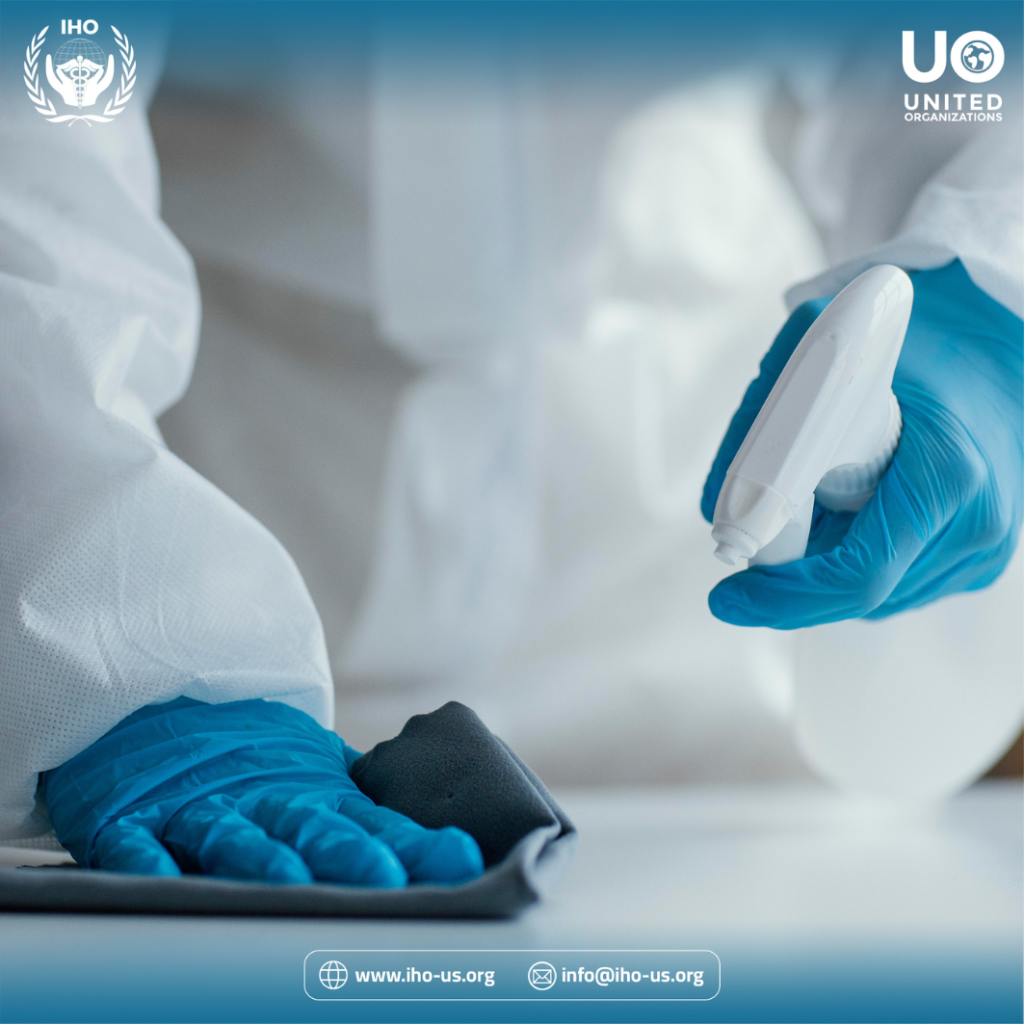
As Part of Strengthening Preventive Health Practices and Protecting Individuals in Homes, Institutions, and Public Facilities
The International Health Organization (IHO) confirms that the effectiveness of surface disinfection does not depend solely on using strong or commonly used substances. Rather, it is fundamentally linked to selecting the appropriate method based on the nature of the surface, its intended use, and the level of daily exposure to microbial risks.
Surfaces that are frequently touched — such as door handles, tables, countertops, elevator buttons, and shared devices — can become carriers of contaminants if their cleaning and disinfection processes are not managed correctly and systematically. Therefore, adopting a scientific and well-considered approach when choosing disinfection materials and methods is an essential part of the daily prevention system.
Why Is One Disinfection Method Not Suitable for All Surfaces?
Surfaces differ in terms of the materials they are made from, their resistance to moisture or heat, their sensitivity to chemical compounds, as well as their rate of use and direct contact. Therefore, applying the same disinfectant to all surfaces may lead to ineffective results, may damage certain materials, may leave undesirable residues, or may reduce the actual efficiency of disinfection.
Proper practice is not based on the principle that “stronger is always better,” but rather on the principle of “what is most suitable for each case.”
Main Types of Surface Disinfection and Their Primary Uses
- Alcohol-Based Disinfection
Disinfection using alcohol-based solutions is considered one of the common and effective options for high-touch surfaces, especially in environments that require quick drying and ease of use. It is often used for small surfaces or equipment that need to be disinfected repeatedly throughout the day.
Key Advantages:
- Fast evaporation and drying
- Suitable for frequently touched surfaces
- Practical for daily use
- Helps reduce the transfer of contaminants when used properly
Important Notes:
- It may not be the best option for visibly dirty surfaces before cleaning
- Some sensitive materials may be affected by repeated use
- Disinfection with Diluted Chlorine
Diluted chlorine is considered one of the well-known substances for effective disinfection of public surfaces, especially in environments that require a higher level of contamination control. However, its effectiveness depends greatly on correct preparation according to recommended ratios, in addition to adhering to the proper contact time.
Main Uses:
- Public surfaces in facilities
- Floors and certain shared areas
- Environments requiring regular periodic disinfection
Professional Warning:
- It must be used with caution
- Recommended concentrations should not be exceeded
- It may cause irritation or damage to some surfaces if misused
- Good ventilation is essential during use
- Disinfectant Cleaners (Cleaning and Disinfection in One Step)
Disinfectant cleaners represent a practical and effective option in many everyday environments, as they combine the removal of visible dirt with the reduction of microbial load at the same time. They are particularly suitable for places that require operational efficiency and speed without neglecting hygiene standards.
Advantages:
- Save time and effort
- Suitable for routine use
- Effective when the manufacturer’s instructions are followed
- Reduce the need for multiple steps in some cases
- Thermal or Steam Disinfection
Thermal or steam disinfection is used with certain surfaces and materials that are resistant to heat and moisture. It is considered a useful option in cases that require deep cleaning while reducing reliance on chemical substances.
It Is Characterized By:
- Supporting deep cleaning
- The ability to reach some corners or tight spaces
- Reducing chemical residues on certain surfaces
However, It Should Be Noted That:
- It is not suitable for all materials
- Some surfaces may be damaged by heat or high moisture
- It requires prior assessment of the surface’s tolerance
- Specialized Disinfection for Facilities and Establishments
In high-use environments — such as institutions, service centers, administrative buildings, and facilities with high operational density — there may be a need for more specialized disinfection methods, carried out according to professional standards and specific protocols.
This includes:
- Scheduled periodic disinfection plans
- Selecting approved materials for professional use
- Focusing on high-touch points
- Applying procedures compatible with the nature of the facility and the intensity of use
This type of disinfection does not depend only on the product itself, but also on the operating methodology, frequency of application, risk assessment, and quality of execution.
The Most Important Rule in Surface Disinfection
The International Health Organization (IHO) confirms that the success of surface disinfection is not measured only by the strength of the substance used, but rather depends on three main elements:
- Choosing the correct type of disinfectant
- Using it in the correct way
- Applying it at the right time and with the appropriate frequency
Excessive use of certain substances may not increase protection. In some cases, it may even lead to adverse effects, such as surface damage, unsafe use, or reduced disinfection effectiveness due to incorrect application.
Effective Disinfection Begins Before Using the Disinfectant Itself
One of the fundamental principles of sound health practices is that cleaning often comes before disinfection, especially when visible dirt or organic residues are present on the surface. The presence of visible contaminants may limit the efficiency of some disinfectants and reduce their ability to directly reach the targeted microorganisms.
Therefore, the most efficient practical protocol often includes:
- Removing visible dirt and contaminants
- Cleaning the surface with the appropriate product
- Applying the disinfectant according to instructions
- Leaving it for the recommended contact time
- Ensuring ventilation or drying depending on the type of material
An Awareness Message from IHO
True prevention does not begin only with major measures, but with the small daily details we practice consistently — foremost among them the cleanliness and disinfection of the surfaces we touch every day.
The correct choice of disinfection method not only protects the surface itself, but also protects people, enhances public safety, and supports the creation of a healthier, more aware, and more sustainable environment.
Not all surfaces require the same method.
Not all disinfectants are suitable for every use.
The safest and most effective approach is the one that combines knowledge, proper selection, and correct application.