Hypertension in Older Adults: Global Challenges and Strategies for Diagnosis and Treatment
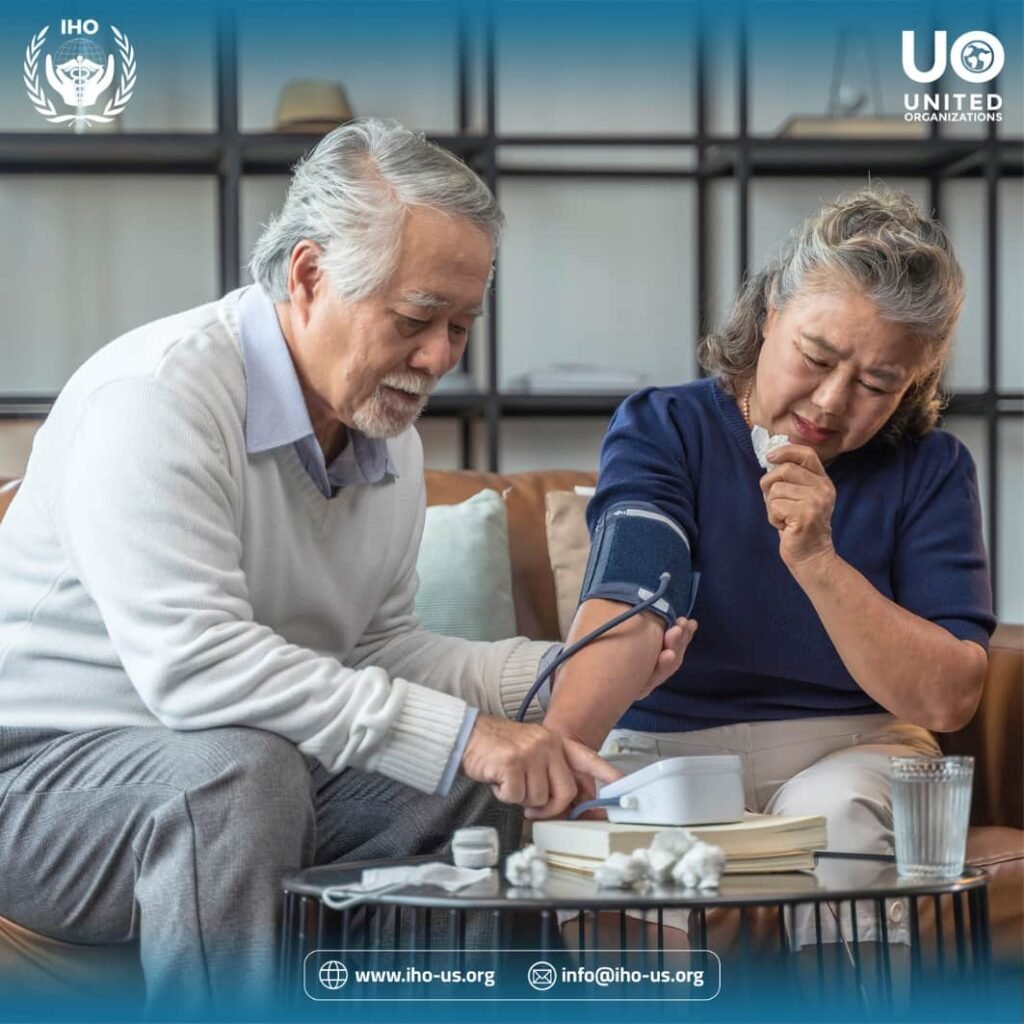
Hypertension is one of the most prevalent chronic diseases among older adults worldwide. It is the leading risk factor for cardiovascular diseases, stroke, and renal failure, which collectively represent the primary causes of mortality and disability in this age group. With the rapid demographic shift toward aging societies, hypertension has become an urgent public health issue requiring a coordinated international response.
Characteristics and Challenges of Hypertension in Older Adults:
- Epidemiological prevalence:
The prevalence of hypertension exceeds 60% among individuals aged 60 years and older in many countries, reaching more than 80% among those over 80 years of age. - Unique patterns:
Isolated systolic hypertension predominates due to the loss of elasticity of large arteries with aging, characterized by elevated systolic blood pressure while diastolic pressure remains normal or low. - Clinical complexity:
Hypertension in older adults is often associated with:- Multimorbidity: such as diabetes mellitus, dyslipidemia, chronic kidney disease, and osteoporosis.
- Frailty syndrome and loss of muscle mass.
- Polypharmacy: increasing the risk of drug–drug interactions and poor adherence.
- Physiological changes: such as reduced glomerular filtration rate, which affects drug metabolism.
- Diagnostic challenges:
An increased risk of white coat hypertension and difficulty in accurate blood pressure measurement due to arterial stiffness.
Treatment Goals and Management:
Although treatment recommendations vary slightly among international organizations, there is consensus on the importance of balancing efficacy and safety:
- Blood pressure targets:
Most guidelines (such as those from the American College of Cardiology/American Heart Association – ACC/AHA – and the European Society of Cardiology – ESC) recommend a target of <130/80 mmHg for healthy older adults, with flexibility to adopt a less stringent target (<140/90 mmHg) for frail individuals or those over 80 years of age, to avoid adverse effects of excessive blood pressure lowering. - Treatment strategy:
- Non-pharmacological interventions: sodium reduction, adoption of the DASH diet, age-appropriate physical activity, weight management, and limiting alcohol intake.
- Pharmacological therapy: usually initiated at low doses with gradual titration (“start low, go slow”). Angiotensin-converting enzyme inhibitors (ACEIs), angiotensin receptor blockers (ARBs), calcium channel blockers (CCBs), or thiazide diuretics are preferred first-line options, and combination therapy is often required.
- Management of complexity: coordinated care to manage all chronic conditions together, with regular medication reviews to simplify regimens.
International Health Organization (IHO) Recommendations:
- Strengthening national policies:
Supporting countries in developing and implementing simple, context-specific national guidelines for managing hypertension in older adults, with a focus on primary healthcare. - Adopting innovative care models:
Promoting models such as multidisciplinary care teams, community pharmacy involvement, and supported self-care using digital health technologies. - Investing in capacity building:
Training healthcare providers in accurate diagnosis (including out-of-office blood pressure measurement), appropriate treatment selection, and principles of geriatric care. - Ensuring access to essential medicines:
Working to make low-cost, effective antihypertensive drug combinations available and affordable in all healthcare facilities. - Research and data:
Supporting research to close knowledge gaps in managing hypertension among special groups of older adults (such as the frail and the very old), and strengthening surveillance systems to monitor trends and outcomes. - Awareness campaigns:
Designing educational campaigns targeting older adults and their families to emphasize the importance of regular blood pressure monitoring, treatment adherence, and healthy lifestyle modifications.
Effective control of hypertension in older adults is not merely a medical intervention; it is an investment in public health and a fundamental prerequisite for achieving the “healthy aging” agenda advocated by the World Health Organization. It requires a comprehensive, person-centered approach that addresses age-related complexities and balances the benefits of blood pressure reduction against the risks of intensive treatment. Global leadership and international coordination are essential to confront this challenge and improve the quality of life for millions of older adults worldwide.
Prepared by:
Dr. Ibrahim Kheder
Community Pharmacist
- Williams, B., et al. (2018). 2018 ESC/ESH Guidelines for the management of arterial hypertension. European Heart Journal, 39(33), 3021–3104.
- المرجع الأساسي الأوروبي الذي يقدم إرشادات مفصلة، بما في ذلك فصل خاص عن علاج كبار السن.
- Unger, T., et al. (2020). 2020 International Society of Hypertension Global Hypertension Practice Guidelines. Hypertension, 75(6), 1334–1357.
- يوفر إرشادات عملية وعالمية مع مراعاة مختلف الموارد الصحية.
- World Health Organization. (2021). HEARTS technical package for cardiovascular disease management in primary health care: evidence-based treatment protocols. Geneva: World Health Organization.
- يحدد حزمة تقنية عملية لدعم البلدان في إدارة الأمراض القلبية الوعائية، بما في ذلك ارتفاع ضغط الدم، في مستوى الرعاية الأولية.
- Benetos, A., et al. (2019). Hypertension management in older and frail older patients. Circulation Research, 124(7), 1045–1060.
- مراجعة شاملة تركز على تعقيدات علاج ارتفاع ضغط الدم لدى المسنين الهشين.
- American College of Cardiology/American Heart Association. (2017). 2017 ACC/AHA/AAPA/ABC/ACPM/AGS/APhA/ASH/ASPC/NMA/PCNA Guideline for the Prevention, Detection, Evaluation, and Management of High Blood Pressure in Adults. Hypertension, 71(6), e13–e115.
- الإرشادات الأمريكية التي حفزت النقاش حول أهداف علاج أكثر صرامة.
6. Mancia, G., & Grassi, G. (2019). Management of hypertension in the elderly and frail elderly. High Blood Pressure & Cardiovascular Prevention, 26(1), 1-7