
Cats are among the most widespread pets and are closely associated with humans. However, some people believe that keeping cats inevitably leads to disease. One of the best-known diseases associated with cats is toxoplasmosis, which results from infection with a microscopic parasite called Toxoplasma gondii. Although this parasite is associated with cats, having a cat at home does not necessarily mean that the infection will be transmitted to humans. Infection usually occurs as a result of specific practices that can easily be prevented.
What Is Toxoplasma gondii?
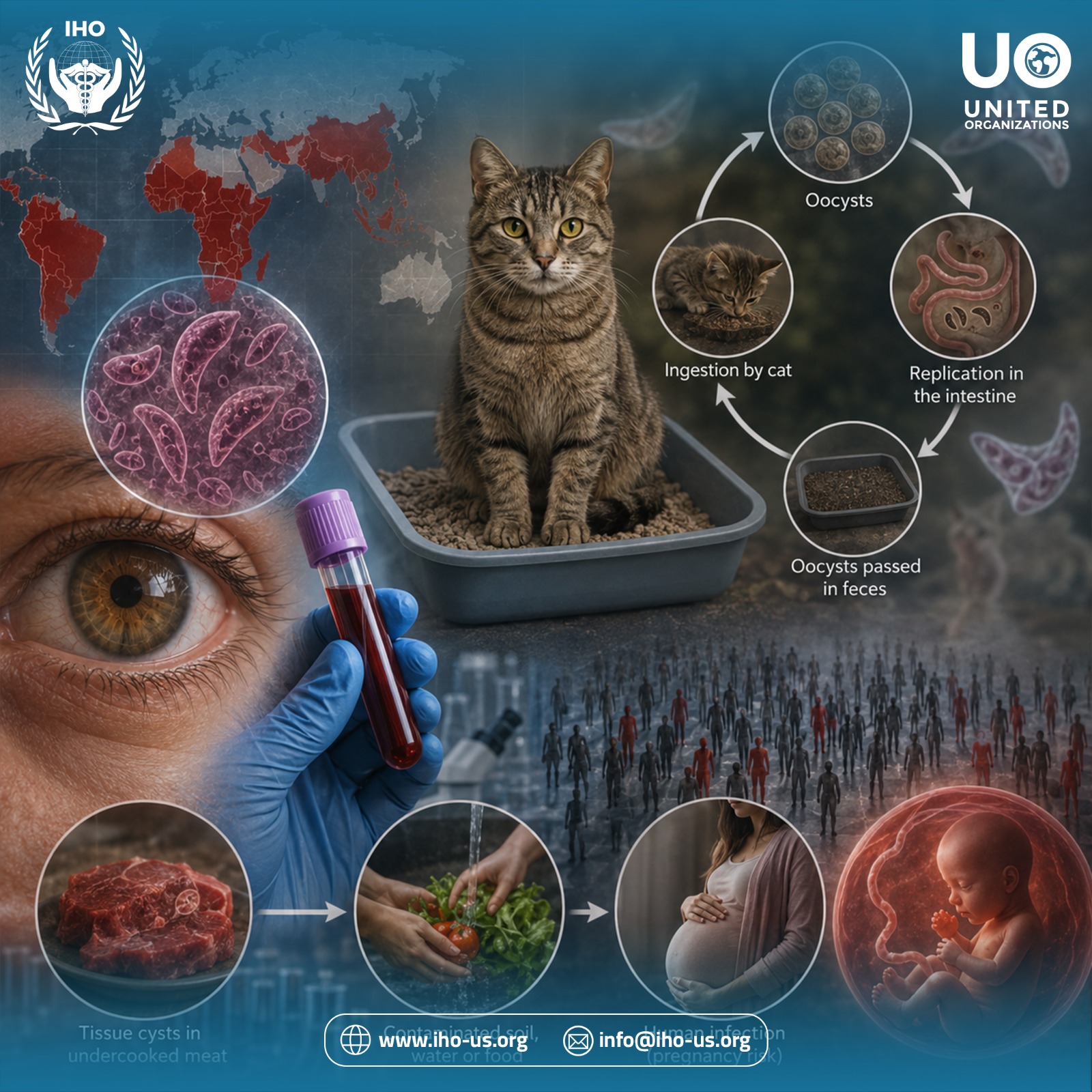
Toxoplasma gondii is a single-celled parasite that can infect humans and many animal species. Cats are the definitive hosts of the parasite, meaning that it can complete its life cycle and reproduce inside their intestines. Some infected cats then shed microscopic parasite eggs, known as oocysts, in their feces.
The cat’s litter box should be cleaned daily because the parasite does not become infectious immediately after being passed in the feces.
How Do Cats Become Infected with Toxoplasma gondii?
Cats are usually infected when they eat infected rodents, birds, or other small animals, or when they consume raw meat containing parasite cysts. They may also become infected by eating food or drinking water contaminated with the feces of an infected cat.
Therefore, cats that go outdoors and hunt animals, or those that are fed raw meat, are more likely to become infected than indoor cats that eat commercially prepared cooked or canned food. ([Mayo Clinic][2])
How Is the Infection Transmitted to Humans?
Toxoplasma gondii is not usually transmitted by touching or petting a cat, and owning an indoor cat does not mean that its owner will contract the disease. Infection occurs when the parasite accidentally enters the mouth. The main routes of transmission include:
- Cleaning the litter box of an infected cat and then touching the mouth before washing the hands.
- Touching soil or sand contaminated with cat feces while gardening or playing.
- Eating fruits and vegetables that have not been thoroughly washed.
- Eating raw or undercooked meat.
- Drinking contaminated water or consuming certain unpasteurized dairy products.
- Transmission from a mother to her fetus if she becomes infected for the first time during pregnancy.
Undercooked meat and contaminated soil or water may be important sources of infection. Therefore, cats should not be considered the sole source of toxoplasmosis. ([CDC][3])
Effects of Toxoplasma gondii on Humans
Most healthy people who become infected do not develop noticeable symptoms because their immune systems prevent the parasite from causing severe illness. Some infected individuals may develop mild flu-like symptoms, including:
- Fever.
- Tiredness and fatigue.
- Muscle aches.
- Headache.
- Swollen lymph nodes, particularly in the neck.
After infection, the parasite may remain dormant in certain tissues of the body. In people with healthy immune systems, this generally does not cause serious problems. However, the parasite may become active again if the immune system becomes weakened.
Groups at Greater Risk
Pregnant Women and Fetuses
The disease becomes more dangerous when a woman is infected with Toxoplasma gondii for the first time during pregnancy or immediately before becoming pregnant, as the parasite can cross the placenta and infect the fetus. Congenital infection may cause problems affecting the eyes, brain, and nervous system. Some complications may not appear until some time after the child is born.
Nevertheless, a pregnant woman does not usually need to give up her pet cat. She should instead follow preventive measures, such as avoiding cleaning the litter box whenever possible and asking another person to perform the task. ([CDC][4])
People with Weakened Immune Systems
The infection may be severe in people with immune deficiencies, individuals living with HIV, cancer patients, people taking immunosuppressive medications, and organ-transplant recipients. In these individuals, the parasite may affect the brain, eyes, lungs, or other organs, requiring prompt medical diagnosis and treatment.
Eye Infection
Toxoplasma gondii may cause inflammation of the retina and the surrounding tissues. This may lead to blurred vision, eye pain, sensitivity to light, or the appearance of spots in the field of vision. An ophthalmologist should be consulted if any of these symptoms develop.
Does Toxoplasma gondii Affect Behavior?
Animal studies, particularly those involving rodents, have shown that infection may affect some of their behavioral responses toward cats. Human studies have also investigated possible associations between infection and certain psychological or behavioral changes.
However, these findings do not conclusively prove that Toxoplasma gondii causes behavioral or psychological disorders in humans, and the relationship requires further research. Therefore, fear should not be spread, and cat ownership should not be directly linked to psychological disorders without clear medical evidence.
Diagnosis and Treatment
Toxoplasmosis can be diagnosed through blood tests that detect antibodies against the parasite. A doctor may require additional tests for pregnant women, people with weakened immune systems, or when an infection of the eyes or brain is suspected.
Most healthy people who do not experience severe symptoms do not require treatment. However, pregnant women, newborns, people with weakened immune systems, and those with complications affecting the eyes or nervous system may require specific medications prescribed by a doctor. Toxoplasmosis medication should not be taken without medical supervision.
Prevention Methods
The risk of infection can be reduced by following several simple precautions:
- Wash the hands thoroughly with soap and water after touching soil or cleaning up cat feces.
- Wear gloves while gardening or handling sand and soil.
- Clean the cat’s litter box daily because the parasite does not become infectious immediately after being passed in the feces.
- Pregnant women and people with weakened immune systems should avoid cleaning the litter box whenever possible.
- Do not feed cats raw or undercooked meat.
- Keep cats indoors to prevent them from hunting rodents and birds.
- Avoid direct contact with stray cats, especially kittens, during pregnancy or when the immune system is weakened.
- Cook meat thoroughly and avoid tasting it before it is fully cooked.
- Wash fruits, vegetables, kitchen utensils, and meat-cutting boards.
- Cover children’s sandboxes to prevent cats from defecating in them.
Health guidelines emphasize the importance of washing the hands, wearing gloves when handling soil, and cleaning food-preparation utensils and surfaces with hot, soapy water. ([CDC][5])
Toxoplasma gondii is a parasite that can be transmitted to humans when they ingest oocysts found in cat feces after the oocysts have become infectious. It can also be transmitted through undercooked meat or contaminated food, water, and soil, and it is also transmitted through undercooked meat and contaminated food, water, or soil. The infection is not usually transmitted simply by touching a cat or keeping one at home. In most healthy people, the disease is mild or causes no symptoms, but it may be dangerous to fetuses and people with weakened immune systems.
Therefore, people should not fear cats or abandon them. Instead, they should maintain good hygiene, clean litter boxes safely, feed cats cooked food, and follow food-safety precautions. By taking these measures, people can enjoy keeping cats while greatly reducing the risk of infection.